
The Honesty War Demands
Before asking people to kill, or to die, a nation owes itself the courage to acknowledge what war actually is.

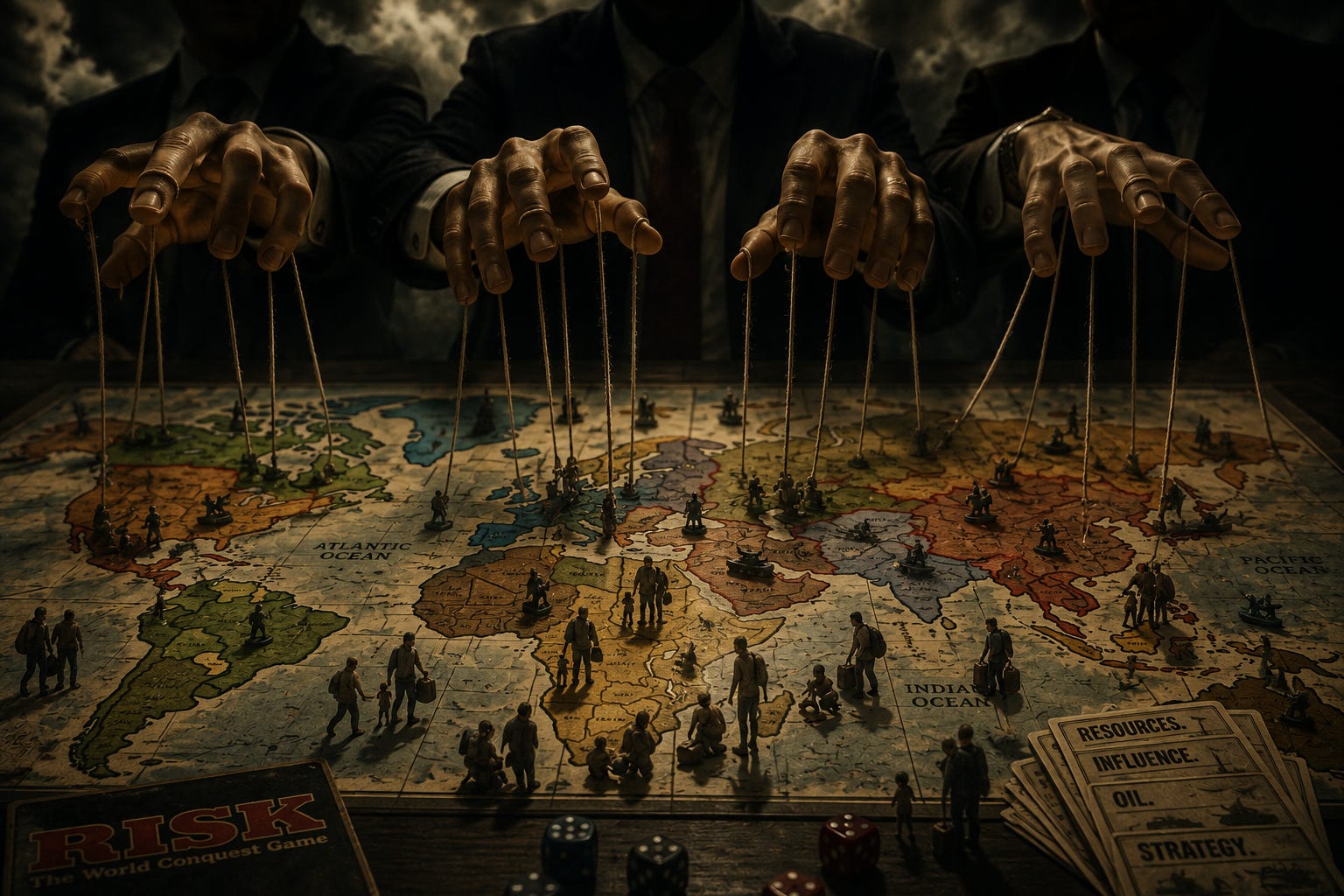
There are certain things I've noticed I almost never write about. After thinking about it for a while, I realized war is probably the biggest one I've skirted around. Not because I've intentionally avoided it, if that's what you're thinking. If anything, I've avoided pretending I have simple answers to questions that refuse to be simple. It's an issue that's so layered and complicated that I struggle to wrap my thoughts into one neat article. Maybe I shouldn't try. Maybe this will simply be the first of many pieces I write about war, assuming I can manage to stay focused long enough to finish this one.
Considering the world we live in, I guess this can be viewed as a glaring omission. Every time you open the news there seems to be another conflict demanding attention. Russia and Ukraine. Israel and Hamas. The US and Iran. Whatever the latest headline happens to be. Everyone has an opinion, and most of those opinions are delivered with a level of certainty I can’t honestly claim for myself.
After thinking about it for a while, continuing to say nothing has started to feel like its own kind of dishonesty. The truth is my opinions on war change depending on the circumstances, as I believe they should for everyone. I don’t believe every war is evil, and I certainly don’t believe every war is justified. Every conflict has to be judged on its own merits. There are causes worth defending. There are aggressors who have to be stopped. History leaves little room to argue otherwise.
At the same time, I think the leash for justified war is far shorter than many governments seem willing to admit. Once you’ve crossed the threshold where violence becomes necessary, there should be very little patience for anything beyond accomplishing the objective as quickly as possible. War should be the exception that every nation hopes never to reach, not another tool sitting comfortably in the foreign policy toolbox.
The Problem With Endless Wars
I think my opinion on the subject stems from the fact that I grew up during the Iraq War. For twenty years, war wasn’t an event, it was simply part of the background noise of American life. There was always another deployment, another speech promising progress, another explanation for why we needed just a little more time. Long enough that an entire generation reached adulthood with a question still hanging in the air.
What exactly were we trying to accomplish?
Whether you believe Iraq was justified or not, I think that question lingered because the objective became increasingly difficult to define. Wars throughout history have often been fought to defend territory, remove a regime, repel an invasion, or force a surrender. The goals were brutal, but they were understandable.
Today, many wars seem to drift, the mission changes, new governments get elected, and justifications evolve. Years become decades, and eventually people stop asking whether we’re winning because nobody can clearly explain what winning would even look like.
That uncertainty doesn’t just wear down public support. I imagine it wears down the people asked to fight those wars even more. A soldier can endure extraordinary hardship when he believes there’s a purpose behind it. History is full of men who marched into conditions that most of us can barely imagine because they believed the suffering was leading somewhere. But what happens when the objective becomes indefinite? When deployments blur together, policies change with election cycles, and “mission accomplished” quietly becomes “mission adjusted”?
Purpose is an incredible source of endurance for our soldiers. Confusion rarely is. This fact becomes increasingly apparent when you take the time to listen to firsthand accounts from many Iraq War veterans. It's not simply that they lost friends overseas. For many, the deeper wound was returning home no longer certain that the sacrifices they and those friends made were ever tied to an objective worthy of the cost. When purpose begins to dissolve in hindsight, so too does the ability to make sense of everything that was given in its name.
War at Arm's Length
That thought led me to another uncomfortable realization about the way many modern nations approach war. We’ve become remarkably comfortable with proxy wars.
For anyone unfamiliar with the term, a proxy war is when two powers avoid fighting one another directly and instead support opposing sides in another country’s conflict. Rather than sending their own armies to the battlefield, they provide weapons, funding, intelligence, training, or logistical support while someone else’s sons and daughters do the fighting and dying.
There is something deeply unsettling about that arrangement. Powerful nations can influence the outcome of a war without ever asking their own citizens to bear the full cost of it. We’ve become increasingly willing to spend money in places where we’re unwilling to sacrifice our own sons and daughters. From a distance, conflict begins to resemble a board game where pieces are moved across a map, except those pieces are still people. The farther we remove ourselves from the battlefield, the easier it becomes to strip the humanity from war, at least in the eyes of those fortunate enough not to fight it. The pieces still bleed. They're just someone else's.
That isn’t to say supporting an ally is always wrong. There are circumstances where helping another nation defend itself may be both morally justified and strategically necessary. But proxy wars also create a dangerous temptation. They lower the political cost of intervention by placing the burden of combat on someone else. When your own population isn’t returning home in flag draped coffins, it becomes much easier for a conflict to stretch from months into years, and from years into decades.
That doesn’t mean helping allies is always wrong. Sometimes it is absolutely the right thing to do. But it should at least make us uncomfortable when supporting a war begins to feel politically easier than honestly debating whether we should be involved in the first place.
The Illusion of Clean Wars
The more I think about it, the more I believe we’ve also developed a deeply contradictory expectation of what war is supposed to look like.
Before anyone misunderstands me, I’m not suggesting that civilians should become indifferent to suffering. Quite the opposite. The horrors of war should never become ordinary, and every effort should be made to reduce unnecessary death and destruction. If a military can accomplish its objective while sparing innocent lives, it has a moral obligation to do so.
The problem is that we’ve gradually come to expect something history has never been able to deliver. We want wars that end quickly, our own casualties to be nearly nonexistent, civilian casualties to be nonexistent, every decision to be morally perfect, and every operation to unfold with surgical precision. Those are admirable goals, and every military should pursue them relentlessly.
But war itself isn’t surgical.
No amount of technological advancement has changed what war ultimately is. Precision guided munitions, better intelligence, and more disciplined rules of engagement can reduce suffering, but they cannot eliminate it. At its core, war remains organized violence carried out to achieve a political objective. It is ugly by its very nature.
That doesn’t mean we should lower our moral standards. It means we should raise our standard for deciding when war is worth beginning in the first place. If we expect war to remain morally pure before we’re willing to fight it, we’ll eventually discover that no such war exists. If we’re unwilling to accept the terrible realities that accompany even a justified war, perhaps that should make us far more hesitant to start one.
The more I worked through these ideas, the more I realized they weren’t separate criticisms at all. They’re different expressions of the same contradiction. We insist war should always be a last resort, yet we often treat it like another instrument of statecraft. We condemn endless conflicts while allowing them to drift on for years without clearly defined objectives. We distance ourselves from the battlefield through proxy wars, making it easier to support violence when someone else’s families are paying the highest price. At the same time, we expect war to remain morally pristine despite choosing one of the least pristine human activities imaginable.
None of this has made me a pacifist, and it certainly hasn’t made me eager for military intervention. If anything, it has made me believe that if a nation is going to ask young men and women to kill, or to die, it owes them more than vague promises and indefinite missions. It owes them a cause that can actually be explained and an objective that can actually be achieved.
Before asking them to bear the terrible burden of war, a nation owes itself the honesty to acknowledge exactly what war is. Because if we’re unwilling to face that reality, perhaps we should be far more reluctant to begin one in the first place.
— Ethan Paine