
Why Nuance Became Dangerous
Emotion, Identity, and the Collapse of Honest Discourse

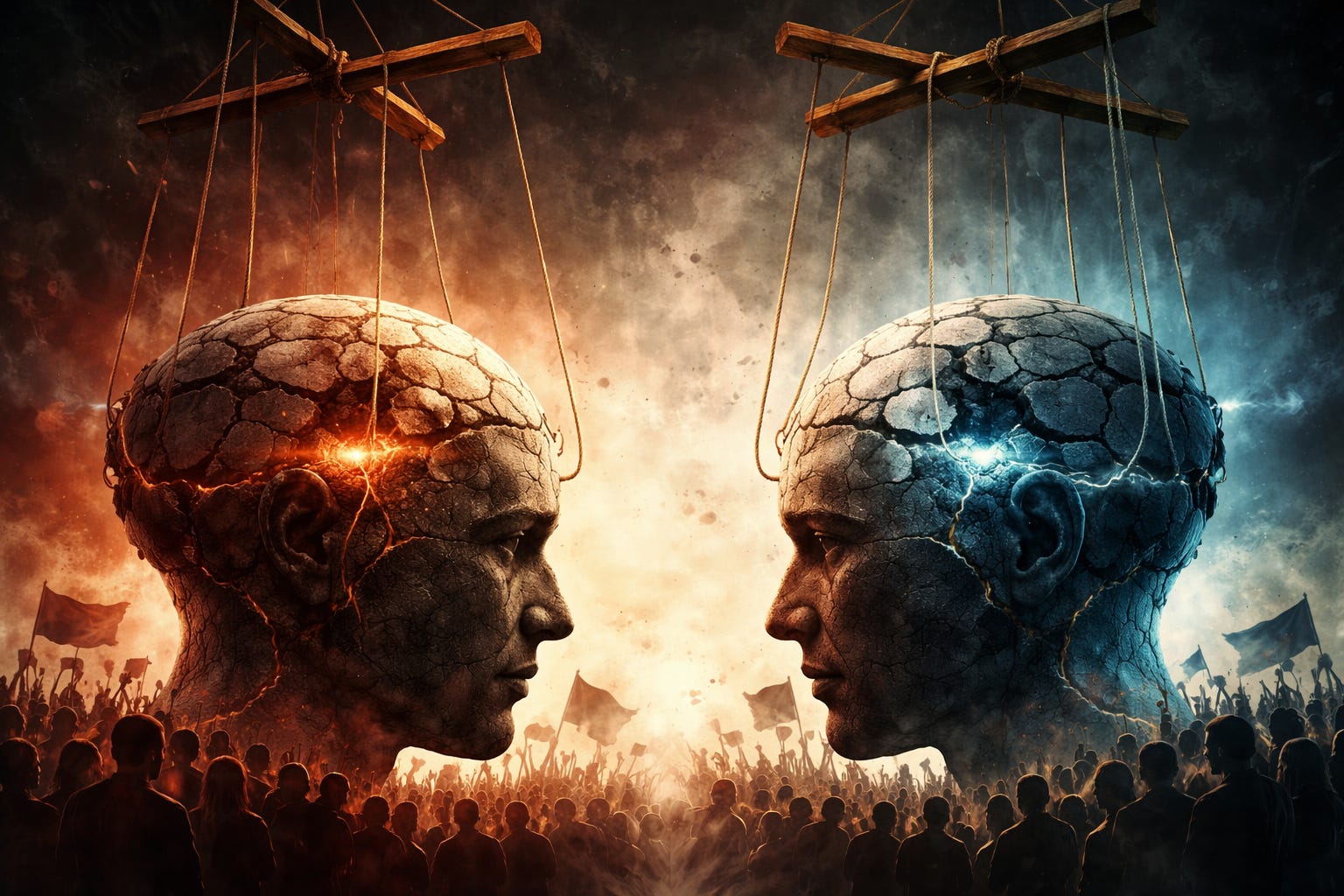
From Events to Camps
I know I’m late to the party talking about the ICE incidents in Minnesota. By the time most people read this, the takes will already be set, the lines drawn, and the emotional temperature locked in place. I’m not really looking to add anything specifically about them anyway. I’m less interested in relitigating the details than in noticing how fast we all seemed to decide what the story was supposed to mean.
Because the pattern is familiar now. Something happens, it’s complicated, messy, and still unfolding, and within hours the conversation stops being about understanding it. The camps form almost immediately. Not positions. Camps. Each with their own language, assumptions, and emotional posture already in place.
What’s striking isn’t that people disagree. It’s how little room there is for uncertainty before the pressure to declare allegiance kicks in. The question stops being what happened or what should be done and becomes where do you stand, and how convincingly you can perform that stance for everyone else watching. That shift matters, because it reveals something deeper than polarization. We haven’t just become more divided. We’ve changed what arguing is for.
There was a time when argument, at least in principle, aimed at persuasion. You laid out facts. You built a case. You appealed to logic, precedent, or shared values. You might still fail, but the goal was to invite someone to see the issue the way you did. Disagreement wasn’t pleasant, but it wasn’t automatically hostile.
That’s no longer the case.
When Opinions Become Identities
Today, most arguments are emotional first and factual second, if factual at all. The objective isn’t to persuade through reasoning, but to overwhelm through intensity. Moral language replaces explanation. Urgency replaces patience. Facts are useful only insofar as they reinforce the emotional thrust of the message, and discarded when they complicate it. This isn’t accidental. It’s adaptive.
Emotional arguments travel faster. They demand less attention span. They require no shared framework beyond feeling. And in an environment where attention is scarce and outrage is rewarded, emotional pressure becomes the most efficient tool available. At the same time there has also been another, maybe less noticeable, but even more significant change. Opinions have stopped being positions we hold and have instead become identities we inhabit.
When an opinion is just a belief, disagreement invites discussion. When it becomes tied to your moral standing or sense of belonging, disagreement feels personal. It doesn’t register as intellectual resistance. It registers as rejection, or worse, accusation. Once that happens, the door to persuasion quietly closes.
You can’t invite someone to reconsider when they already feel attacked. You can’t ask someone to examine nuance when they believe nuance is a threat. And you certainly can’t slow a conversation down when the emotional stakes are framed as existential. This is why nuance has become so radioactive.
Acknowledging complexity, especially in situations involving law enforcement, immigration, violence, or state power, immediately raises suspicion. If you don’t condemn loudly enough, you’re accused of complicity. If you ask questions, you’re accused of bad faith. If you attempt to hold two truths at once, you’re told you’re minimizing harm.
Nuance diffuses emotional leverage. It weakens the sense of urgency that keeps attention locked in. And because modern discourse depends on urgency to function, nuance gets treated not as honesty, but as betrayal. The result is a feedback loop.
Identity deepens emotional investment. Emotional investment heightens defensiveness. Defensiveness escalates rhetoric. Escalated rhetoric flattens complexity. And flattened complexity reinforces identity. And once that loop takes hold, we make ourselves remarkably easy to manipulate.
The Cost of Choosing Feeling Over Understanding
When we argue emotionally, when we anchor our identities to outrage and belonging instead of understanding, we stop being participants in a conversation and become raw material for anyone willing to pull the right strings. All someone has to do is echo our language, validate our feelings, sharpen our fears, and we’ll follow. Not because we’ve been persuaded, but because we feel seen. Because our heartstrings are already out in the open, stretched tight, waiting for someone to pluck them.
That’s the danger of emotional argument replacing persuasion. It doesn’t just shut down dialogue, it invites influence. It turns us into predictable actors in a script someone else can write. And the more we divide ourselves into rigid camps, the easier it becomes for outside forces, political, institutional, or otherwise, to play those camps against each other while we’re too busy performing our roles to notice.
But the deeper cost isn’t manipulation. It’s what happens between us. We lose the ability to talk to each other. Not debate, not posture, not trade moral indictments, but actually talk. To sit with uncomfortable questions. To acknowledge complexity without treating it as betrayal. To disagree without assuming malice. That ability isn’t a luxury. It’s a requirement for living together in any meaningful way.
When we abandon it, problems don’t disappear. They fester. They harden. They grow more divisive precisely because they’re never worked through. Over time, the shared ground erodes, not because the issues are unsolvable, but because we’ve made them untouchable. Everything becomes too loaded, too symbolic, too tied to who we think we are to examine honestly.
Eventually, there’s nowhere left to stand together. Not because we faced irreconcilable truths, but because we retreated into fabricated identities built on emotional alignment instead of understanding. Camps formed less out of principle than out of convenience, because it feels good to belong and exhausting to think.
And thinking is harder. It’s slower. It doesn’t offer the immediate relief of certainty. It requires you to wrestle with ideas instead of outsourcing that work to a feeling, a slogan, or a side. Emotional positioning is easier. More efficient. It gives you the sensation of moral clarity without the effort of analysis. But a society that chooses efficiency over understanding, again and again, doesn’t just lose better conversations. It loses resilience. It loses trust. It loses the capacity to solve problems together without coercion or collapse.
None of this means people should stop caring. It doesn’t mean emotion has no place in public life. Emotion is often what alerts us that something matters. But when feeling replaces thinking instead of informing it, and when identity hardens around opinion instead of grounding it, we don’t just become louder. We become fragile.
If we can’t make room for disagreement without treating it as a personal offense, if we can’t have the hard conversations without immediately retreating into camps, then we don’t just risk being divided. We risk being led. And that’s worth sitting with before the next moment arrives, before the next story breaks, and we’re once again asked not to understand what happened, but to choose a side quickly enough to prove who we are.
Because survival, in the end, doesn’t come from how loudly we feel. It comes from whether we can still talk to each other when it would be easier not to.
— Ethan Paine